
- AWS-native AI integration · ships in 6–10 weeks
Insights
From the blog
Field notes from production
Architecture, evals, security, and the trade-offs that don’t make the marketing page.

- Braviosys
- Industry
Your AI vendor has owners, competitors, and products of its own. Meta just found out what that means.
OpenAI offered Washington a 5% stake — about $42.6B — and wants the rest of the industry to do the same. Meanwhile Google quietly rationed Gemini capacity to Meta, forcing its engineers to conserve tokens. Model supply now has politics and priorities attached. Neither of them are yours.

- Braviosys
- Framework
AI just handed every lawyer 240 hours a year. The firms that pull ahead will be the ones who can trust the output.
The 2026 Thomson Reuters report shows legal AI adoption nearly doubled in a year and now frees lawyers roughly 240 hours each. The capability question is settled. Only 17% of legal professionals trust AI to give advice and just 18% measure its ROI — which means the real advantage is no longer using AI. It's proving you can rely on it.

- Braviosys
- Industry
Microsoft just spent $2.5B to prove the hard part of AI isn't the model. It's the deployment.
Microsoft's new Frontier organization puts $2.5 billion and 6,000 experts behind a single idea: enterprises don't need more AI tools, they need help getting AI into production. That's the clearest signal yet of where the value has moved — and it's good news for anyone still stuck at the pilot.

- Braviosys
- Industry
Prompt injection is now the #1 AI attack. The fix isn't a smarter model — it's a boundary.
OWASP's 2026 report puts prompt-injection attacks up 340% year over year. A backdoored LiteLLM package sat on PyPI for three hours and was pulled ~47,000 times, poisoning CrewAI, DSPy, and Microsoft GraphRAG. The models aren't getting more gullible — we keep handing them untrusted input and privileged tools in the same breath.
- Braviosys
- Industry
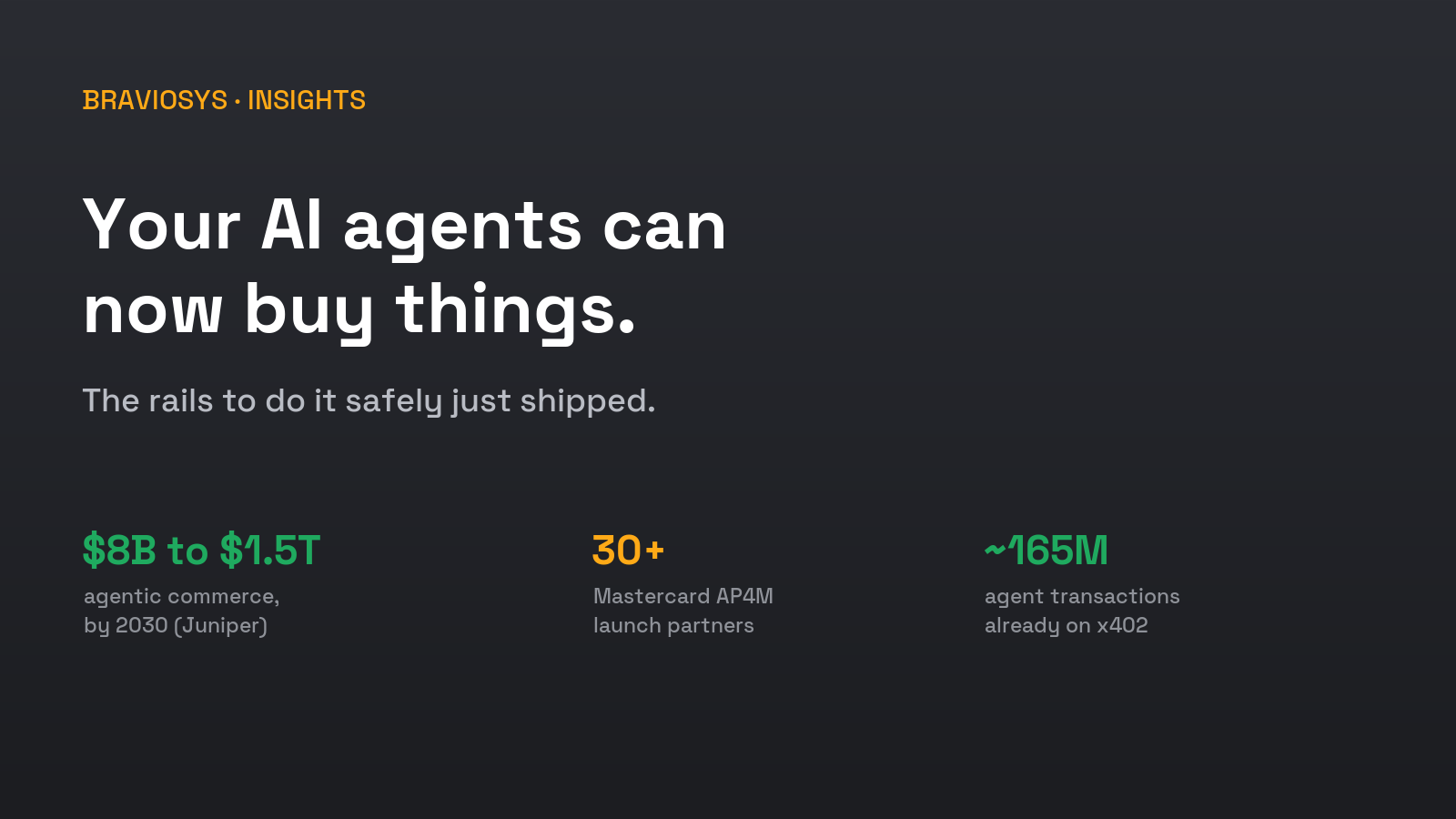
Your AI agents can now buy things — and the rails to do it safely just shipped.
In a single month, Visa completed hundreds of secure agent-initiated payments and Mastercard launched Agent Pay for Machines with 30+ partners. Juniper puts agentic commerce at $8B this year, growing to $1.5 trillion by 2030. The infrastructure for agents that transact has arrived — and the controls that make it trustworthy came baked in.
- Braviosys
- Industry
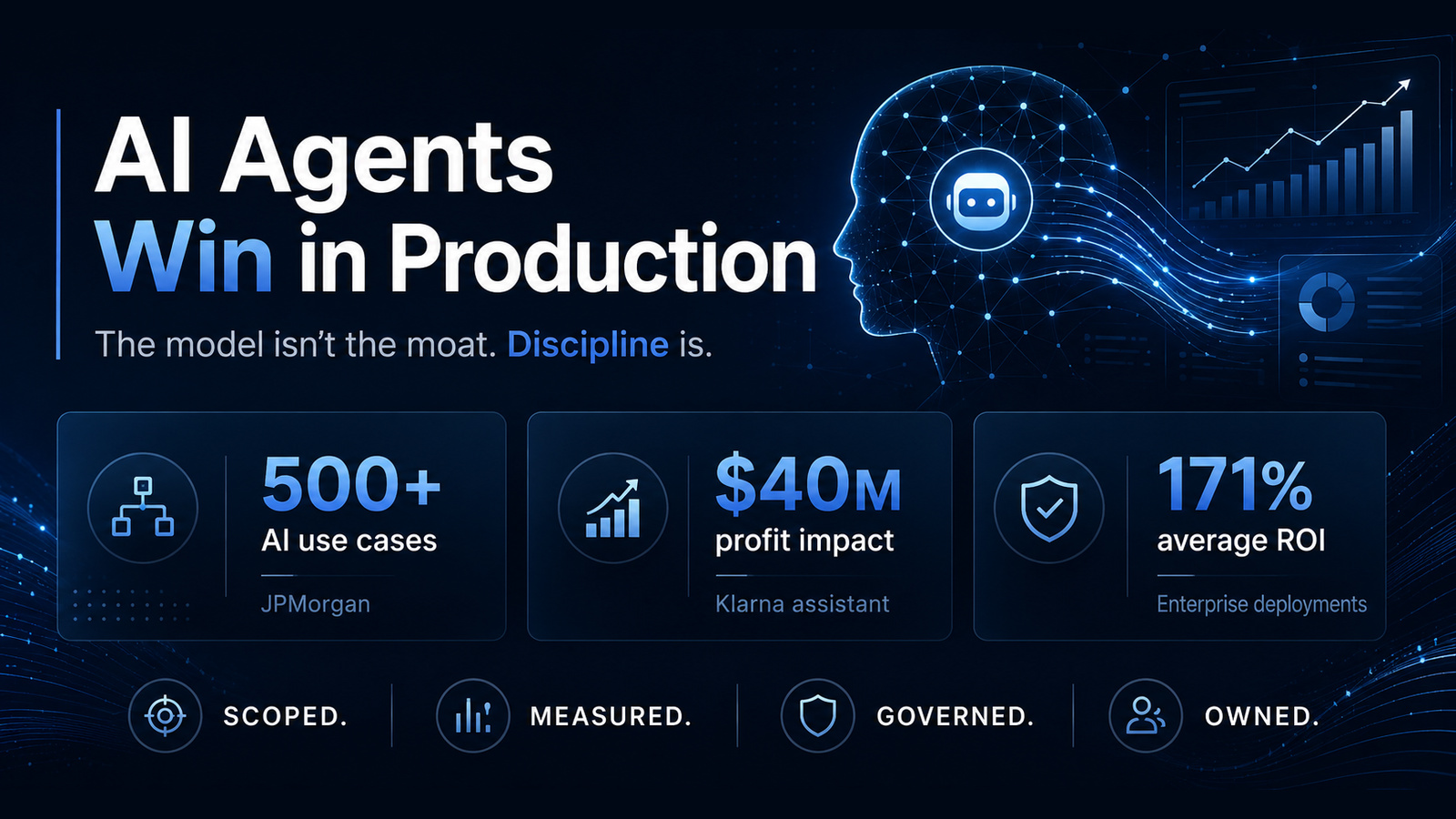
Agentic AI is paying off in production — and the proof is no longer anecdotal
JPMorgan runs 500+ AI use cases in production. Klarna's assistant added an estimated $40M to profit doing the work of 700 agents. Enterprise deployments now average 171% ROI. The agents that win aren't running better models than everyone else — they're built on a discipline you can copy.
- Braviosys
- Industry
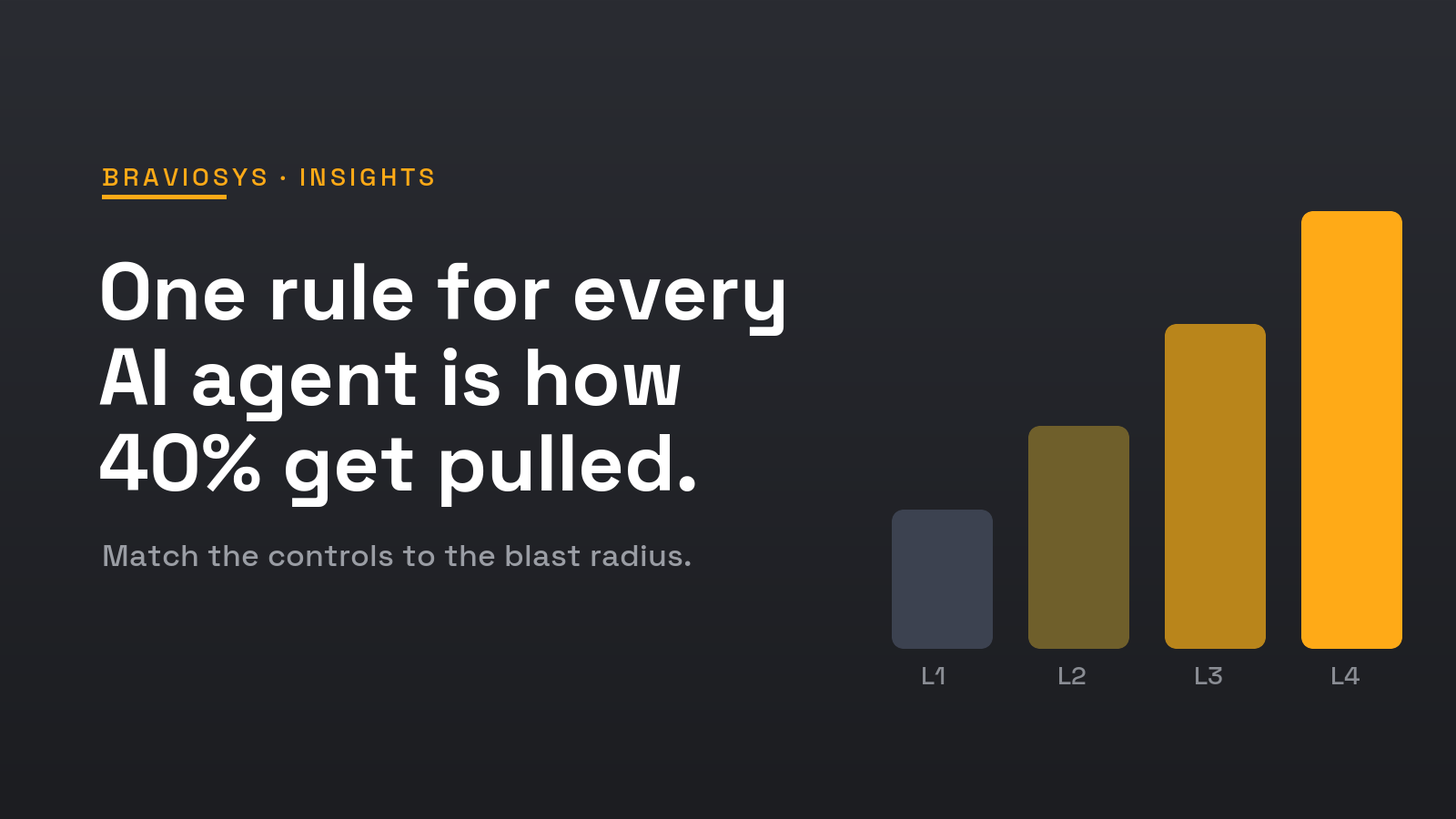
Governing every AI agent the same way is how 40% get pulled. Match the controls to the blast radius.
Gartner says that by 2027, 40% of enterprises will demote or decommission their autonomous AI agents — not because the agents failed, but because governance was binary: locked down or fully trusted. The fix isn't more control or less. It's control proportional to what each agent can actually touch.

- Braviosys
- Industry
Fable 5 went from GA to pulled in 72 hours. Plan your stack like that's normal.
Anthropic's Claude Fable 5 reached general availability on AWS on June 9. On June 12 a US export-control directive forced it offline for every user worldwide. The model was perfect; the dependency was the risk. That distinction is the whole job.
- Braviosys
- Industry
Claude moves inside the AWS bill. What that actually changes for AWS-native shops.
Amazon's April 20 announcement of a $25B Anthropic investment is being read as compute-arms-race news. The line that matters for builders is buried three paragraphs in: full Claude Platform, same AWS account, same bill, no separate contracts.
- Braviosys
- Framework
Agentic AI deployment doubled at large enterprises in twelve months. The middle market is missing it.
JPMorgan's late-February data shows agentic AI adoption at companies over $1B jumped from 11% to 26% in a year. Smaller companies are not seeing the same curve — and the reason matters.
- Braviosys
- Industry
Anthropic is spending $50 billion to stop being a tenant. What that means for the rest of us.
Anthropic's November 12 announcement of a $50B custom data center buildout signals something bigger than a compute race. It is a bet on who owns the AI stack — and where the leverage lives.

- Braviosys
- Framework
The MIT NANDA report won't age well — and that's the problem
MIT's 'GenAI Divide' report says 95% of enterprise AI pilots fail. The headline is true. The framing — that AI is failing companies — gets the causality backwards.